


Introduction
In today’s fast-paced business environment, managing human resources efficiently is no longer optional—it’s essential. HRMS software (Human Resource Management System) has become a critical tool for organizations looking to automate, streamline, and optimize their HR processes.
From payroll management to employee engagement, HRMS software provides a centralized solution that improves accuracy, saves time, and enhances decision-making.
What is HRMS Software?
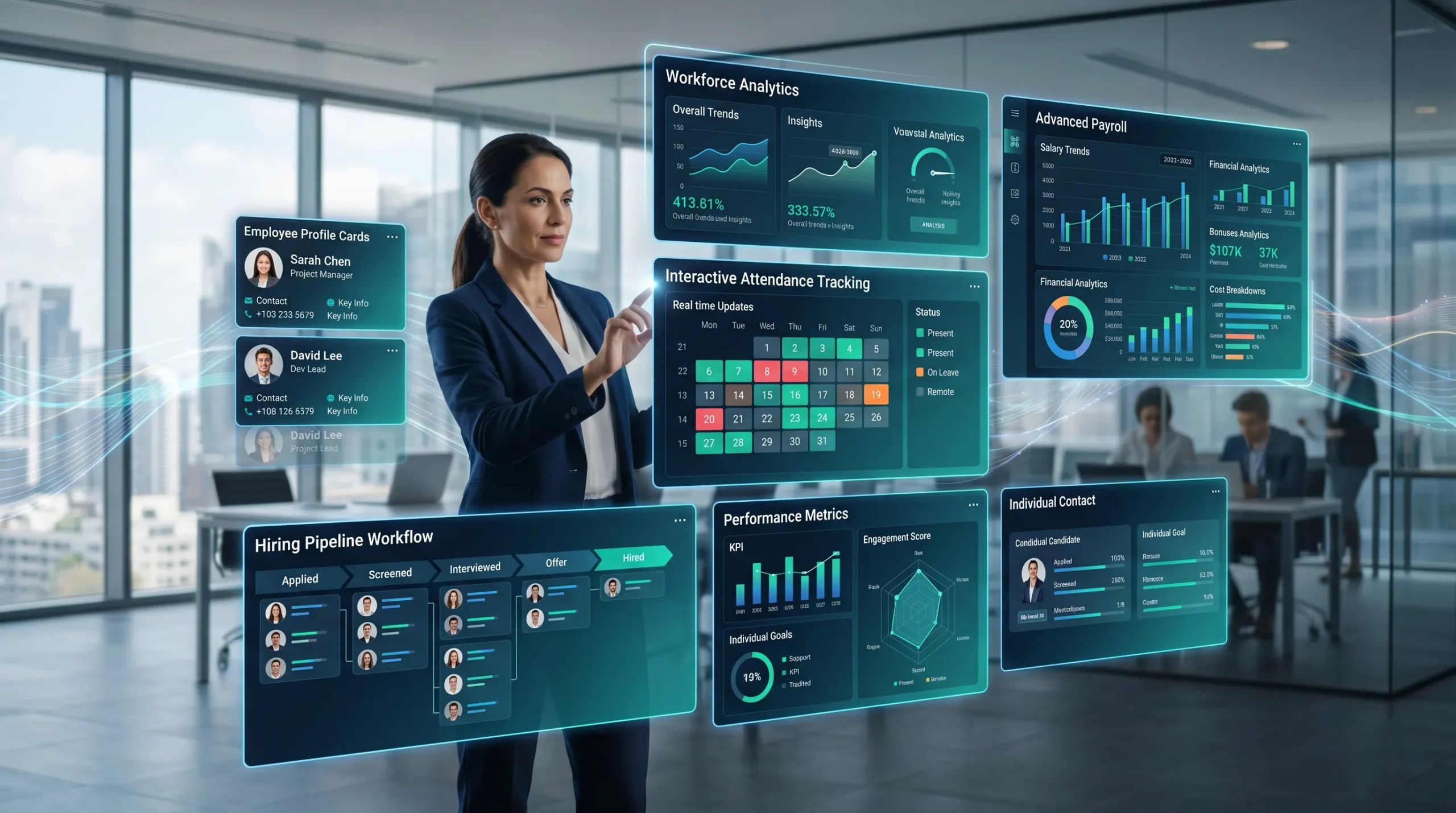
HRMS software is a digital solution designed to manage and automate HR functions such as:
- Employee data management
- Payroll processing
- Attendance tracking
- Recruitment and onboarding
- Performance management
It combines HR processes and technology into a single integrated platform.
Key Features of HRMS Software
1. Personnel Management
Store and manage employee data securely in one place.
2. Payroll Automation
Automate salary calculations, tax deductions, and payslip generation.
3. Time & Attendance Tracking
Track employee working hours with biometric or RFID integrations.
4. Recruitment Management
Streamline hiring from job posting to onboarding.
5. Employee Self-Service (ESS)
Allow employees to update personal data, apply for leave, and download payslips.
6. Performance Management
Evaluate employee performance with KPIs and appraisals.
Benefits of HRMS Software
Increased Efficiency
Automation reduces manual workload and errors.
Improved Accuracy
Eliminates payroll and compliance mistakes.
Better Decision Making
Provides real-time analytics and reports.
Enhanced Employee Experience
Self-service portals improve transparency and engagement.
Why Businesses Need HRMS Software in 2026
The modern workforce demands flexibility, transparency, and efficiency. HRMS software enables businesses to:
- Manage remote and hybrid teams
- Ensure compliance with labor laws
- Scale HR operations easily
- Improve employee retention
How to Choose the Best HRMS Software
When selecting HRMS software, consider:
🔹 Scalability
Can it grow with your business?
🔹 Integration
Does it integrate with accounting and attendance systems?
🔹 User Experience
Is the interface easy to use?
🔹 Customization
Can it adapt to your workflows?
Common Challenges Without HRMS Software
Without a proper system, businesses face:
- Payroll errors
- Data duplication
- Poor employee experience
- Compliance risks
Future Trends in HRMS Software
- AI-powered recruitment
- Predictive analytics
- Mobile-first HR platforms
- Cloud-based systems
Conclusion
Investing in the right HRMS software is no longer a luxury—it’s a necessity. Businesses that adopt modern HR solutions gain a competitive advantage by improving efficiency, compliance, and employee satisfaction.
HRMS is a digital system that helps businesses manage HR functions like payroll, attendance, recruitment, and employee data. It works by centralizing all HR processes into one platform, reducing manual work and improving efficiency.
The main features of HRMS include payroll management, attendance tracking, employee self-service, recruitment management, and performance evaluation.
HRMS automates repetitive tasks such as payroll processing and leave management, allowing HR teams to focus on strategic activities and improving overall productivity.
Yes, HRMS is highly beneficial for small businesses as it reduces manual workload, minimizes errors, and helps manage HR operations efficiently even with limited resources.
Most modern HRMS can integrate with accounting systems, biometric devices, and third-party applications to ensure seamless data flow across departments.
Yes, HRMS uses advanced security measures such as encryption and role-based access control to protect sensitive employee data.
HRMS is used across various industries including IT, healthcare, manufacturing, retail, and logistics.
To choose the right HRMS, consider factors such as scalability, ease of use, customization options, integration capabilities, and pricing.