



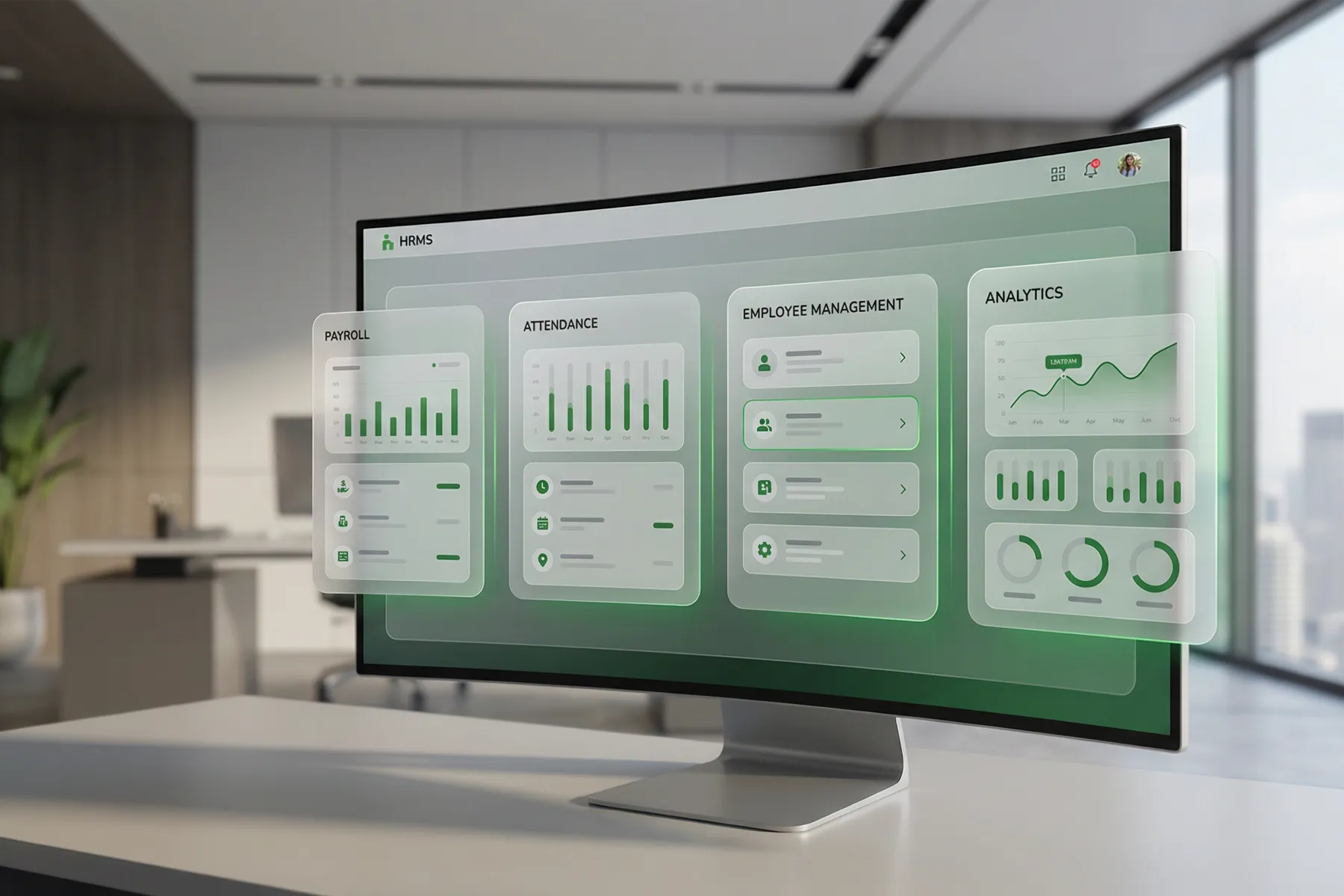
Managing human resources efficiently is one of the biggest challenges for modern businesses. From payroll and attendance to recruitment and compliance, HR teams handle multiple complex tasks every day. This is where an HRMS system becomes essential.
An HRMS system (Human Resource Management System) helps businesses automate and streamline HR operations, improving efficiency, reducing errors, and enhancing employee experience. In Qatar, where compliance, workforce diversity, and operational efficiency are critical, adopting an HRMS system is no longer optional — it’s a necessity.
In this guide, we’ll explore what an HRMS system is, its features, benefits, and how to choose the right solution for your business.
What is an HRMS System?
An HRMS system is a software platform that integrates and automates various human resource functions such as payroll, attendance, recruitment, and employee management.
It acts as a centralized system where businesses can manage the entire employee lifecycle — from hiring to retirement.
Modern HRMS solutions help organizations:
- Automate repetitive HR tasks
- Maintain employee records
- Manage payroll and compliance
- Track attendance and leave
- Improve decision-making through analytics
By replacing manual processes with automation, HRMS systems significantly improve productivity and efficiency.
Why Businesses in Qatar Need an HRMS System
1. Compliance with Labor Laws
Qatar businesses must follow strict labor regulations. An HRMS system ensures accurate record-keeping and compliance with legal requirements.
2. WPS (Wage Protection System) Integration
Payroll accuracy is critical. HRMS systems help generate WPS-compliant payroll reports and avoid penalties.
3. Managing Diverse Workforce
With multinational employees, managing HR manually becomes complex. HRMS centralizes data and simplifies operations.
4. Multi-Location Workforce Management
Businesses operating across multiple locations need real-time visibility — which an HRMS system provides.
Key Features of an HRMS System
An effective HRMS system includes a wide range of modules that cover the entire employee lifecycle.
1. Employee Management
- Centralized employee database
- Document management
- Employee profiles
2. Attendance Management
- Mobile and biometric attendance
- GPS and geofencing
- Real-time tracking
3. Payroll Management
- Automated salary calculations
- Overtime and deductions
- WPS compliance
4. Leave Management
- Leave requests and approvals
- Holiday calendar
- Leave balance tracking
5. Recruitment & Onboarding
- Applicant tracking
- Digital onboarding
- Document workflows
6. Performance Management
- Goal setting
- Employee evaluations
- Continuous feedback
7. Employee Self-Service (ESS)
Employees can:
- View payslips
- Apply for leave
- Check attendance
8. Analytics & Reporting
HRMS systems provide real-time insights for better decision-making.
Benefits of Using an HRMS System
1. Increased Efficiency
HRMS automates repetitive tasks, saving time and improving productivity.
2. Improved Accuracy
Automation reduces human errors in payroll and attendance tracking.
3. Better Employee Experience
Employees get access to self-service tools, improving transparency and engagement.
4. Cost Savings
Reducing manual processes lowers administrative costs.
5. Real-Time Insights
HR managers can make data-driven decisions using analytics.
6. Scalability
HRMS systems grow with your business, making them suitable for all company sizes.
HRMS vs HRIS vs HCM – What’s the Difference?
| System | Purpose |
| HRMS | Automates HR processes |
| HRIS | Stores employee data |
| HCM | Focuses on talent strategy |
👉 HRMS is the most practical solution for operational HR management.
How HRMS Systems Improve Business Productivity
An HRMS system doesn’t just manage HR — it transforms how businesses operate.
- Automates payroll and attendance
- Reduces administrative workload
- Improves workforce planning
- Enhances communication
By automating routine processes, HR teams can focus on strategic tasks instead of manual work.
Cloud-Based HRMS vs Traditional Systems
| Feature | Traditional | Cloud HRMS |
| Accessibility | Limited | Anywhere |
| Cost | High | Affordable |
| Updates | Manual | Automatic |
| Scalability | Low | High |
👉 Cloud-based HRMS systems are becoming the standard for modern businesses.
Common Challenges Without an HRMS System
Businesses without an HRMS often face:
- Payroll errors
- Manual data entry issues
- Lack of visibility
- Compliance risks
- Inefficient processes
Future Trends in HRMS Systems (2026)
AI-Powered HRMS
Automation will become smarter with predictive analytics.
Mobile-First HR Systems
Employees will manage HR tasks entirely through mobile apps.
Real-Time Workforce Analytics
Advanced reporting will drive better business decisions.
Integration with Business Systems
HRMS will integrate with ERP, accounting, and CRM systems.
How to Choose the Right HRMS System
1. Identify Your Needs
Understand your HR challenges and business goals.
2. Check Features
Ensure it includes payroll, attendance, and compliance tools.
3. Evaluate Scalability
Choose a system that grows with your business.
4. Consider Localization
For Qatar:
- WPS support
- Arabic language
- Local compliance
5. Ease of Use
The system should be user-friendly for employees and HR teams.
Why Synergia HRMS is the Right Choice
Synergia HRMS is designed specifically for businesses in Qatar and GCC.
✔ Mobile-based attendance (Face + QR)
✔ GPS & Geofence tracking
✔ WPS-ready payroll
✔ Bilingual (English & Arabic)
✔ No biometric hardware required
👉 A complete HRMS system built for modern workforce management.
Conclusion
An HRMS system is no longer just a tool — it’s a strategic investment for business growth. It simplifies HR operations, improves accuracy, and enhances employee experience.
For businesses in Qatar, adopting an HRMS system ensures:
- Compliance
- Efficiency
- Scalability
- Real-time insights
Ready to Transform Your HR Operations?
If you’re still managing HR manually, now is the time to upgrade. 👉 Experience the power of a modern HRMS Software and take your workforce management to the next level.