
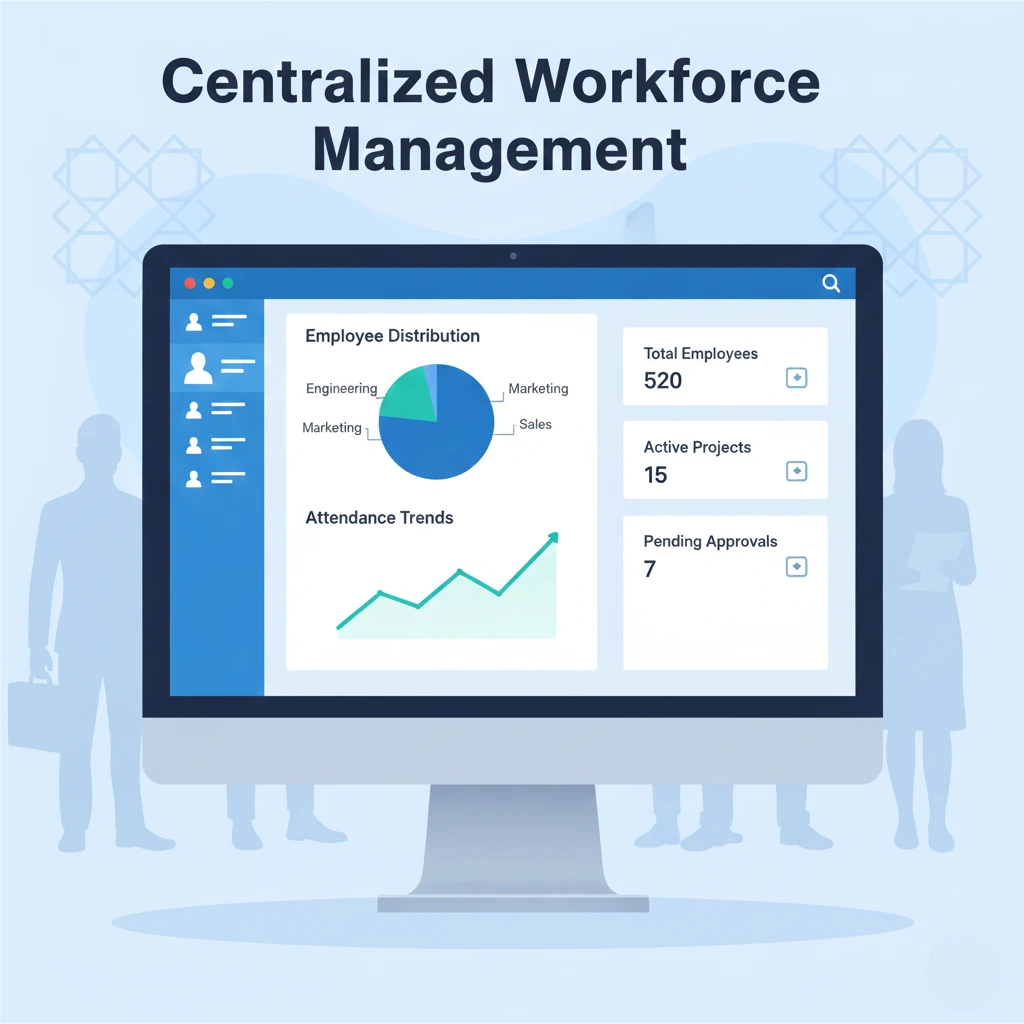
Workforce Management Solutions in Qatar: Centralizing Employee Data for Better Decision‑Making
Managing a growing workforce in Qatar comes with unique challenges—from ensuring compliance with local labour laws to tracking attendance and payroll accuracy. A workforce management solution Qatar businesses trust can transform scattered HR processes into a centralized, efficient system. When employee information lives across spreadsheets, filing cabinets, and disconnected tools, decision-makers lack the real-time insights needed to drive business growth. This blog explores how centralizing employee data through modern HR software helps Qatar-based companies make smarter, faster decisions while staying compliant and competitive.
Key Takeaways
- Centralized employee data management systems eliminate manual errors and save HR teams hours of administrative work each week.
- A workforce management solution Qatar companies rely on ensures WPS compliance, accurate payroll, and streamlined attendance tracking.
- Centralized HR database Qatar platforms provide real-time insights that improve workforce planning, resource allocation, and strategic decision-making.
Why Centralized Employee Data Matters for Qatar Businesses
Managing employee information across multiple platforms creates confusion and inefficiency. When HR teams juggle separate systems for payroll, attendance, leave requests, and document storage, critical data often gets lost or duplicated. A centralized HR database that Qatar businesses implement solves this problem by bringing all employee information into one secure platform.
Companies operating in Qatar face strict compliance requirements under Qatar Labour Law and the Wage Protection System (WPS). Without centralized records, tracking contract renewals, visa expirations, and labour law obligations becomes a constant struggle. An employee data management system provides a single source of truth, ensuring HR teams can access accurate information instantly. This reduces compliance risks and eliminates the manual work of searching through files or spreadsheets. Studies demonstrate that companies implementing centralized HR and ERP systems experience a 32% reduction in errors, significantly improving data accuracy and compliance management.
When employee data lives in one place, HR managers gain visibility into workforce patterns. They can identify trends in attendance, spot high-turnover departments, and plan staffing needs based on real data rather than guesswork. This level of insight transforms HR from a reactive function into a strategic partner that drives business outcomes. Research shows that organizations with strong people analytics capabilities experience a 25% increase in business productivity, demonstrating the tangible value of data-driven workforce management.
Key Features of an Effective Workforce Management Solution
Not all workforce management solutions deliver the same value. The best systems combine automation, compliance tools, and user-friendly interfaces that work for both HR teams and employees. Here’s what makes a workforce management solution Qatar businesses choose stand out from basic HR software.
Automated Payroll and WPS Compliance
Manual payroll processing wastes time and increases the risk of costly mistakes. An effective workforce management solution automates salary calculations, deductions, allowances, and bonuses while ensuring WPS compliance. This means payroll runs on schedule every month, employees receive accurate pay, and businesses avoid penalties for late or incorrect wage transfers. Payroll management software integrated with WPS automatically generates salary files in the required format, eliminating manual data entry. It tracks multi-component salary structures, calculates overtime based on attendance data, and produces compliant payslips for every employee. Deloitte research indicates that HR staff typically spend 57% of their time on administrative tasks, but automation reduces payroll processing time by up to 70%, freeing HR teams to focus on strategic initiatives rather than spreadsheet calculations.
Real-Time Attendance and Leave Tracking
Accurate time tracking forms the foundation of fair payroll and productive workforce management. Modern systems integrate with biometric devices, mobile check-ins, and shift schedules to capture attendance data automatically. Employee attendance tracking syncs directly with payroll, ensuring that overtime, late arrivals, and absences reflect correctly in salary calculations. Employees can request leave through self-service portals, and managers receive instant notifications to approve or deny requests based on team availability. Real-time dashboards show who’s working, who’s on leave, and which departments have capacity—helping managers make informed scheduling decisions. This visibility prevents overstaffing during slow periods and understaffing during busy seasons.
Centralized Document Management and Renewals
HR departments handle countless documents—employment contracts, visa papers, medical certificates, training records, and more. A centralized database stores all employee documents digitally with version control and secure access. Automated reminders notify HR teams about upcoming contract renewals, visa expirations, and medical checkup deadlines, preventing last-minute scrambles and compliance issues. Document management features include role-based permissions, audit trails, and search functionality that lets HR staff find any file in seconds. This eliminates the physical storage costs and security risks associated with paper filing systems.
Employee Self-Service and Mobile Access
Empowering employees to manage their own information reduces HR workload and improves satisfaction. Employee self-service portals let staff view payslips, check leave balances, update personal details, and submit expense claims without contacting HR for every small request. Mobile apps extend this convenience further, allowing employees to clock in from job sites, request time off while traveling, and access important documents from anywhere. Self-service capabilities cut HR support tickets by up to 60% while giving employees faster access to the information they need.
How Centralized Data Improves Business Decision-Making
Data scattered across systems provides little strategic value. When employee information consolidates into a centralized HR database Qatar businesses access through dashboards and reports, leadership gains the insights needed for smarter decisions.
Real-time reporting shows workforce costs, headcount by department, turnover rates, and attendance patterns at a glance. Managers can compare overtime expenses across teams, identify departments with high absenteeism, and track recruitment effectiveness over time. These insights inform budget planning, resource allocation, and growth strategies. For example, if data reveals that one branch consistently needs temporary staff during peak seasons, leadership can adjust hiring plans proactively rather than reacting to shortages.
HR management software with analytics capabilities helps companies forecast workforce needs based on historical trends. If the data shows 15% annual growth in headcount, HR can plan recruitment timelines, budget increases, and onboarding resources accordingly. This proactive approach prevents the chaos of last-minute hiring and ensures new employees have proper training and tools from day one. Academic research confirms that data-driven HR decision-making significantly impacts employee productivity, retention, and overall organizational performance, with organizations using workforce analytics seeing measurable improvements in business outcomes.
Centralized data also supports performance management. When employee goals, review scores, and development plans exist in one system, managers can identify high performers for promotion, spot skill gaps that require training, and make fair compensation decisions based on objective metrics rather than subjective impressions.
Choosing the Right Workforce Management Solution for Your Qatar Business
Selecting workforce management software requires understanding your company’s specific needs and growth plans. Start by identifying the biggest pain points in your current HR processes—whether that’s payroll errors, compliance risks, manual attendance tracking, or disconnected systems.
Look for solutions built specifically for the Qatar market with WPS integration, Arabic language support, and features aligned with local labour regulations. Generic international software often lacks the compliance tools Qatar businesses require. Evaluate vendors based on implementation support, training resources, and ongoing customer service. The best providers offer guided onboarding, staff training, and responsive technical support when questions arise.
Consider scalability as your business grows. A solution that works for 50 employees should also handle 200 or 500 without requiring a complete system replacement. Cloud-based platforms offer flexibility, automatic updates, and remote access that on-premise systems can’t match. Security should be a priority—ensure any system you choose includes data encryption, regular backups, and role-based access controls to protect sensitive employee information.
Request demos from multiple providers and involve your HR team in the evaluation process. They’ll use the system daily and can assess whether the interface is intuitive and workflows match your actual processes. Many companies also request trial periods to test the system with real data before making a final commitment.
Conclusion
Implementing a comprehensive workforce management solution Qatar businesses depend on transforms HR operations from manual, error-prone processes into strategic, data-driven functions. Centralized HR database Qatar platforms eliminate the inefficiencies of scattered information, reduce compliance risks, and provide the real-time insights leadership needs for better decision-making. By automating payroll, streamlining attendance tracking, and empowering employees through self-service tools, companies save time, reduce costs, and build more engaged workforces.
The right employee data management system doesn’t just organize information—it becomes the foundation for smarter workforce planning, improved productivity, and sustainable business growth. Whether you’re a small business looking to scale or a large enterprise seeking better efficiency, centralizing employee data is no longer optional in Qatar’s competitive business environment. Ready to transform your HR operations? Contact Synergia to discover how our workforce management solution can help your business thrive.
FAQ
1. What is a workforce management solution?
A workforce management solution is integrated software that helps businesses automate HR tasks like payroll, attendance tracking, leave management, and employee data storage. It centralizes all workforce information in one platform, reducing manual work and improving accuracy while ensuring compliance with local labor laws.
2. How does a centralized HR database improve business operations in Qatar?
A centralized HR database eliminates data silos by storing all employee information in one secure location. This reduces errors, speeds up decision-making, ensures WPS and Qatar Labour Law compliance, and provides real-time insights into workforce costs, attendance patterns, and staffing needs for better resource planning.
3. What are the main benefits of employee data management systems?
Employee data management systems reduce administrative work by up to 60%, eliminate duplicate records, improve data accuracy, and ensure secure document storage. They enable instant access to employee files, automate renewal reminders for contracts and visas, and support compliance reporting for Qatar’s regulatory requirements.
4. Can small businesses in Qatar benefit from workforce management software?
Yes, small businesses gain significant advantages from workforce management software. These systems automate time-consuming payroll and attendance tasks that small HR teams struggle to manage manually. They also ensure WPS compliance without requiring dedicated compliance staff, provide automated leave management that reduces administrative burden, and scale easily as the business grows without costly system replacements.
5. How does WPS integration work in Qatar workforce management solutions?
WPS integration automatically generates salary files in the Ministry of Labour-approved format required for wage transfers through Qatar’s banking system. The software calculates salaries, deductions, and allowances, then exports data that banks accept directly for processing, eliminating manual file preparation and reducing compliance risks.
6. What should companies look for when choosing HR software in Qatar?
Companies should prioritize WPS compliance features, Arabic language support, attendance integration with biometric systems, automated payroll calculations, document management with renewal alerts, employee self-service portals, and mobile access. Look for vendors offering implementation support, staff training, and systems designed specifically for Qatar’s labour regulations.
7. How long does it take to implement a workforce management system?
Implementation timelines vary based on company size and data complexity. Most businesses complete basic setup and employee data migration within 2-4 weeks. Full deployment including training, system customization, and integration with existing tools typically takes 4-8 weeks. Cloud-based solutions generally implement faster than on-premise systems.
8. Does workforce management software integrate with existing accounting systems?
Most modern workforce management solutions offer integration capabilities with popular accounting software through APIs or data export features. This allows payroll data to flow seamlessly into accounting systems for financial reporting. Check with vendors about specific integrations with your existing tools before making a purchase decision.
9. How secure is employee data in cloud-based HR systems?
Reputable cloud-based HR systems use bank-level encryption, regular security audits, automated backups, and role-based access controls to protect sensitive information. Data centers typically include redundant systems and disaster recovery protocols. Look for vendors with ISO certifications and clear data privacy policies compliant with Qatar’s regulations.
10. Can workforce management solutions help reduce overtime costs?
Yes, these solutions provide real-time visibility into attendance patterns and overtime accumulation across teams. Managers receive alerts when employees approach overtime thresholds, enabling proactive schedule adjustments. Analytics help identify departments with consistent overtime issues, allowing leadership to address understaffing before costs spiral out of control.


