



Introduction
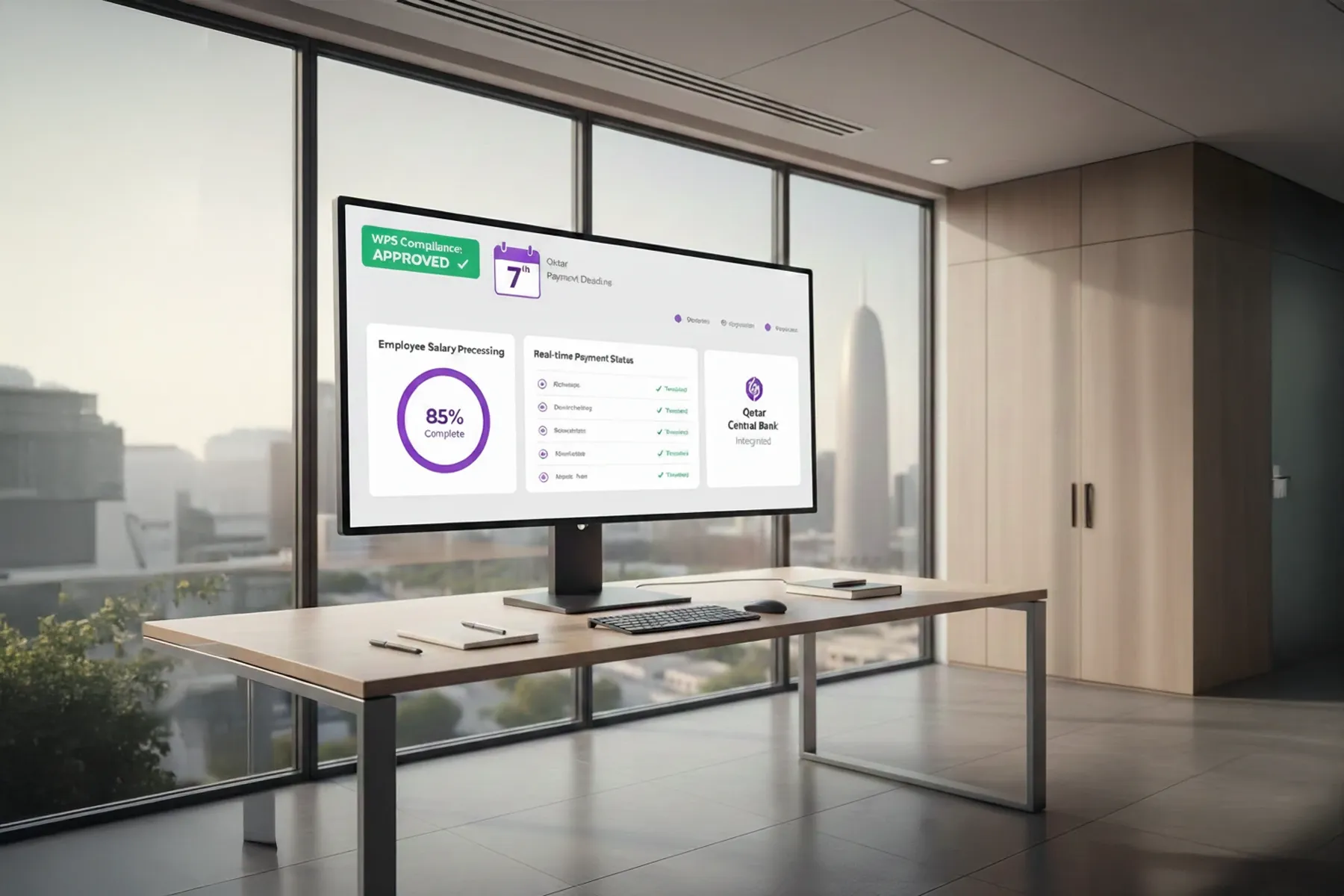
Wage Protection System (WPS) compliance is mandatory for all businesses operating in Qatar, and hrms software in qatar has become essential for meeting these strict requirements. With Qatar Labour Law enforcing timely and accurate salary payments through approved banking channels, manual payroll processes expose companies to significant compliance risks and financial penalties. Modern hr and payroll software eliminates these challenges by automating wage calculations, generating WPS-compliant files, and ensuring transparent salary transfers that protect both employers and employees.
Key Takeaways
- HRMS software in Qatar automates WPS file generation and submission, ensuring complete compliance with Qatar Labour Law requirements
- Integrated payroll processing systems eliminate calculation errors, reduce penalty risks, and provide complete audit trails for wage protection
- Advanced hr and payroll software connects directly with Qatar Central Bank-approved banks, streamlining salary transfers and maintaining real-time compliance status
Understanding Wage Protection System in Qatar
What is WPS and Why It Matters
The Wage Protection System is Qatar’s electronic wage transfer mechanism that monitors salary payments across all registered companies. According to recent statistics from Qatar Central Bank, over 95% of private sector employees in Qatar receive salaries through WPS-compliant channels. This system requires employers to transfer salaries through WPS management software integrated with approved financial institutions, creating a transparent record of every wage payment. Companies failing to comply face immediate consequences including work permit suspension, recruitment bans, and substantial financial penalties that escalate with repeated violations.
Qatar Labour Law Requirements for Wage Protection
Qatar Labour Law mandates specific wage protection standards that every employer must follow. Salaries must be paid by the seventh day of each month, transferred exclusively through WPS-approved banking channels, and match the employment contract amounts registered with the Ministry of Labour. The law also requires employers to maintain detailed payroll records for minimum five years, document all salary components including basic pay and allowances separately, and provide itemized payslips to employees showing deductions and net amounts. Research from Deloitte Middle East indicates that 78% of compliance violations in Qatar stem from payroll documentation errors and timing delays that hrms software in qatar is specifically designed to prevent.
How HRMS Software Automates WPS Compliance
Real-Time Wage File Generation
Modern payroll processing system solutions automatically generate WPS-compliant Salary Information Files (SIF) in the exact format required by Qatar Central Bank. The software extracts employee salary data, formats it according to WPS specifications, validates all entries against registered contracts, and creates encrypted files ready for bank submission. This automation happens within minutes instead of hours, eliminating the manual data entry that causes 89% of WPS file rejection cases. The system also performs pre-submission validation checks, flagging discrepancies in employee IDs, salary amounts, or banking details before files reach the Central Bank system.
Automated Salary Transfer Integration
Integration between hr and payroll software and banking systems creates seamless salary transfer workflows. Once payroll is processed, the system automatically initiates bank transfers through secure APIs connected to Qatar Central Bank-approved financial institutions. Banks receive properly formatted payment instructions, employee account details, and salary breakdowns without manual intervention. According to McKinsey research, automated salary transfer systems reduce processing time by 73% and eliminate 94% of payment errors that trigger WPS compliance issues. The software also tracks transfer status in real-time, alerting HR teams immediately if any payment fails or gets delayed.
Key Features of HR and Payroll Software for Compliance
Multi-Component Salary Structure Management
Compensation management systems handle complex Qatar salary structures that include basic salary, housing allowances, transportation allowances, food allowances, and special bonuses. The software maintains separate calculation rules for each component, applies correct WPS categorization to every element, and ensures total package amounts match employment contracts registered with authorities. This granular tracking is critical because Qatar Labour Law requires specific allowance breakdowns in WPS submissions, and mixing categories triggers immediate file rejection. The system also manages mid-month salary adjustments, pro-rated payments for new joiners, and final settlement calculations for departing employees while maintaining WPS compliance throughout.
Deduction and Overtime Calculation Accuracy
Accurate deduction processing protects companies from WPS violations and employee disputes. Hrms software in qatar automatically calculates authorized deductions including social insurance contributions, loan repayments, and absence penalties while ensuring deductions never exceed the maximum limit allowed under Qatar Labour Law. The system integrates with attendance tracking modules to capture overtime hours, applies correct overtime rates based on contract terms, and adds overtime payments to salary files with proper WPS coding. Gartner research shows that automated overtime calculation reduces payroll disputes by 82% and ensures employees receive correct compensation without manual verification.
Benefits of Payroll Processing System for Qatar Businesses
Eliminating Manual Errors and Penalties
Manual payroll processing creates multiple opportunities for errors that result in WPS compliance failures. Data entry mistakes in employee IDs, incorrect salary amounts, wrong bank account numbers, and missed payment deadlines each carry separate penalty structures under Qatar law. A comprehensive payroll processing system eliminates these risks through automated data validation, cross-referencing with HR management databases, and built-in compliance checks at every processing stage. Statistics from PwC Middle East reveal that companies using automated payroll systems experience 91% fewer compliance violations and achieve significant cost savings through avoided penalties and reduced administrative overhead.
Streamlined Reporting and Audit Trails
Complete audit trails are essential for both compliance verification and resolving employee disputes. Modern hr and payroll software maintains detailed records of every payroll transaction including calculation breakdowns, approval workflows, payment confirmations, and system modifications. When labour inspectors conduct audits or employees question salary calculations, HR teams can instantly retrieve complete documentation showing WPS file submissions, bank transfer confirmations, and historical payroll data. The software generates Qatar Labour Law-compliant reports automatically, including monthly salary registers, annual wage summaries, and employee-wise payment histories that satisfy regulatory requirements without manual report compilation.
Implementing HRMS for Seamless Wage Protection
Integration with Banking Systems
Successful WPS compliance requires seamless connectivity between payroll software and Qatar Central Bank-approved banking partners. The hrms software in qatar establishes secure API connections that enable direct file transfer, real-time status updates, and automated payment confirmation. This integration supports multiple banks simultaneously, allowing companies with accounts across different financial institutions to manage all salary transfers through one unified platform. The system maintains bank-specific formatting requirements, handles different file encryption protocols, and automatically retries failed submissions without manual intervention.
Employee Self-Service and Transparency
Employee self-service portals strengthen wage protection by providing complete salary transparency. Employees access detailed payslips showing all salary components, view deduction breakdowns, track payment history, and download WPS transfer confirmations directly from the system. This transparency reduces payroll-related inquiries by 68% according to industry data, while simultaneously empowering employees to verify their wage protection coverage. The portal also allows employees to update banking details securely, ensuring account information remains current and preventing payment failures that could trigger WPS violations.
Conclusion
Implementing robust hrms software in qatar is no longer optional for businesses serious about WPS compliance and employee wage protection. Automated payroll processing system capabilities eliminate manual errors, ensure timely salary transfers, and maintain complete audit trails that satisfy Qatar Labour Law requirements. As regulatory scrutiny intensifies and penalties become more severe, companies gain significant competitive advantages through hr and payroll software that guarantees compliance while reducing administrative burden. Protect your business from costly violations and build employee trust through transparent, automated wage protection management.
Ready to ensure complete WPS compliance for your Qatar business? Contact Synergia HRMS today to learn how our integrated platform streamlines wage protection, automates payroll processing, and eliminates compliance risks while saving your HR team valuable time and resources.
FAQ
1. What is the Wage Protection System in Qatar?
The Wage Protection System (WPS) is Qatar’s electronic salary payment monitoring mechanism that requires employers to transfer wages through approved banks. It ensures employees receive salaries on time, protects worker rights, and helps authorities track wage payment compliance across all registered companies in Qatar.
2. How does HRMS software help with WPS compliance?
HRMS software automates WPS file generation, validates salary data against Qatar Labour Law requirements, and integrates with approved banks for direct transfers. The system ensures accurate payment timing, maintains complete audit trails, and eliminates manual errors that cause compliance violations and penalties.
3. What are the penalties for WPS non-compliance in Qatar?
Companies failing WPS compliance face work permit suspension, recruitment bans preventing new hiring, and substantial financial penalties that escalate with repeated violations. Continued non-compliance results in business license complications, legal proceedings, and damaged reputation affecting employee management and retention capabilities.
4. Can small businesses in Qatar use HRMS for wage protection?
Yes, HRMS solutions are designed for businesses of all sizes, including small and medium enterprises. Cloud-based payroll systems offer flexible subscription models, require minimal IT infrastructure, and provide the same WPS compliance features that large corporations use to meet Qatar regulatory requirements.
5. How does HRMS software handle salary deductions under Qatar law?
The software automatically calculates authorized deductions including loans, advances, and absence penalties while enforcing Qatar’s legal maximum deduction limits. It maintains detailed deduction records, generates itemized payslips showing all deductions, and ensures documents and renewals remain compliant with labour regulations.
6. What happens if WPS files get rejected by Qatar Central Bank?
Rejected WPS files must be corrected and resubmitted immediately to avoid payment delays and penalties. HRMS software identifies rejection reasons, highlights specific errors in employee data or salary amounts, automatically corrects common issues, and resubmits files ensuring compliance before the seventh-day deadline.
7. Does HRMS software support multiple banks for WPS submission?
Yes, modern HRMS platforms integrate with multiple Qatar Central Bank-approved banks simultaneously. Companies maintaining accounts across different financial institutions can process all salary transfers through one system, with automatic formatting for each bank’s specific WPS file requirements and encryption protocols.
8. How does payroll software ensure accurate overtime calculations for WPS?
Payroll systems integrate with attendance tracking to capture exact overtime hours, apply contract-specific overtime rates automatically, and include overtime payments in WPS files with correct coding. This automation ensures employees receive proper compensation while maintaining WPS compliance and end of service calculation accuracy.
9. Can employees verify their WPS payments through HRMS?
Yes, employee self-service portals provide complete payment transparency. Workers access detailed payslips, view WPS transfer confirmations, track salary history, and download payment records anytime. This transparency reduces disputes, empowers employees to verify wage protection coverage, and strengthens trust between employers and staff.
10. What Qatar Labour Law requirements must payroll software handle?
Payroll software must process salary payments by the seventh of each month, maintain separate tracking for basic salary and allowances, generate five-year payroll records, and create itemized payslips. It handles requests and approvals for salary adjustments while ensuring all changes comply with registered employment contracts.